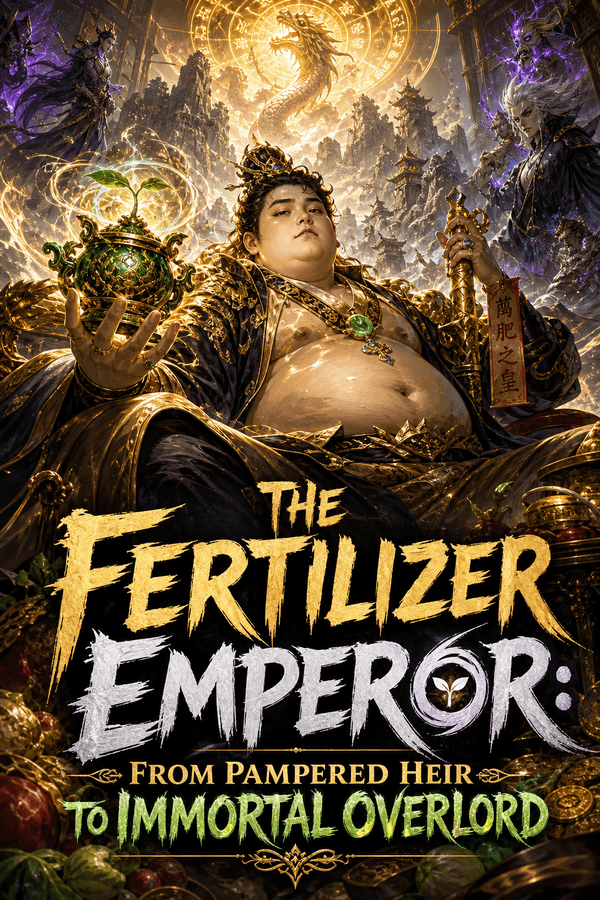
The night passed without incident. Around noon the next day, Mi Lan woke up slowly as the sunlight hit his backside, shook off his just-waking and still somewhat hazy head, and called out, "Dress me."
"Yes."
Two crisp responses rang out from outside the door. The closed door was pushed open from the outside, and two delicate maidservants walked in.
They were Yingying and Yanyan, the maidservants who tended to Mi Lan's daily life. Unlike Chunyue and Qiuhua, Yingying and Yanyan did not practice martial arts and were simply ordinary people.
Once dressed, Mi Lan stepped out of the bedroom. Yingying and Yanyan curtsied slightly toward his retreating back and began tidying his room.
Stepping out the door and passing through his courtyard, Chunyue and Qiuhua had already fallen in step behind the young master. Once they cleared the courtyard, Zhang Ya and Wuzhao also took their places behind Mi Lan.
Chunyue, Qiuhua, Zhang Ya, and Wuzhao were children from impoverished families with excellent potential whom Mi Quebi had purchased when they were young. He provided them with cultivation techniques and resources so they could protect young master Mi Lan. Today, Zhang Ya and Wuzhao had reached the Seventh and Eighth Layers of Qi Control respectively, while Chunyue and Qiuhua were still in the first or second layers due to their youth. The Mi Family had once promised that all maidservants and pages guarding the young masters and misses would enjoy the cultivation resources distributed by the clan. Upon reaching Polar Transformation, they would gain their freedom and could choose to leave or become Mi Family elders, enjoying generous elder allowances.
Of course, every month the guards and maidservants were evaluated by the young masters and misses with ratings of "Excellent, Good, Average, or Poor." Those who received an Excellent rating could continue their previous work, but with even better monthly stipends and cultivation resources. Those with a Average rating were transferred away from the young masters and misses to join the clan guard, taking on patrol and training duties. Those with a Poor rating were assigned to guard the spirit fields or even do hard labor like farming herbs, digging earth, and repairing roads, while receiving the lowest tier of monthly stipends. Consequently, all the pages and maidservants guarding the young masters worked with utmost diligence, as none of them wanted to lose what they currently had. Better resources meant reaching Polar Transformation sooner and earlier enjoying a life truly their own.
Mi Lan hastily finished his midday meal, then led the group to the stables and led out his prized steed, "Zhuifeng"—a fine horse that Uncle Qin had given to Grandpa Mi Duodu, who in turn had given it to Mi Lan.
Mi Lan wanted to go to Donghai City because it had a marketplace exclusively for cultivators.
Mi Lan wanted to buy a gift for Qin Nana. After all, Nana had entered some sect seven years ago to begin cultivation, and Mi Lan feared she might not like ordinary mortal trinkets, nor would a young master of his status present something so subpar.
The party of five arrived in Donghai City an hour later.
The five dismounted and led their horses on foot toward the city gates—this was the rule; those entering the city must dismount and walk slowly. Of course, there were great scions from prominent families who rode directly inside on horses or even exotic beasts, and the city guards simply turned a blind eye. In truth, Mi Lan could have ridden straight inside as well, but the young master was a man who abided by the rules, so he queued up and entered with the ordinary citizens. Because Mi Duodu had once said a few things that Mi Lan felt made sense: he said that our Mi Family is a prominent household, and a prominent household should possess the bearing and refinement of a prominent household. Strutting about sideways, terrified that others wouldn't know your worth, was merely the behavior of nouveau riche.
Mi Lan did not know how many years his ancestors had farmed spirit fields or sold spiritual herbs; he only knew that his family was wealthy—super wealthy. Therefore, lacking nothing, Mi Lan paid the utmost attention to his own refinement, earning the young master a reputation across the various cities under Dongshan Prefecture for his benevolence and scattering of wealth like a boy distributing treasures. As for the exact amount of money he had given away and how many people he had helped, Mi Lan could no longer remember.
The main thoroughfare of Donghai City was larger, wider, and filled with a much greater, busier stream of people than Yijia Town. Mi Lan and his party walked along the main street amidst the flow of people, watching small buildings with gray walls and green tiles line both sides one after another. Dappled in bright attire, people chatted and laughed as they went in and out. There were weather-beaten peasants carrying shoulder poles, sitting by the roadside to sell their homegrown melons and greens; elderly folk in patched yet clean and crisp clothes selling tea; old women carrying various scents selling free-range chickens and ducks; peddlers selling sugar-coated figurines, self-made rouge, and so on... and of course, sellers of the candied hawthorns Mi Lan loved. Mi Lan spent a single Tianwu copper coin to buy five skewers of candied hawthorns, handing one to each person. As they licked the treats, he could not help sighing that despite the thirty-myriad-year golden age of peace in the Empire, the common people at the bottom still lived with great difficulty. Mi Lan even saw a ragged old woman trading farm eggs for a fisherman's fish.
Passing through the bustling, market-like streets, Mi Lan also caught sight of the Mi family's thriving grain shop, clothing boutique, and spiritual medicine pavilion. Unlike other shops, the Mi Family Medical Hall saw ordinary people in simple attire constantly coming and going. The ordinary medicine of the Mi Family was very cheap, sold to commoners at a loss, and provided completely free of charge to truly destitute families. Why didn't the medical hall go bankrupt, you ask? Because wealthy households also fell ill, and for the nobility, Mi Family doctors made house calls. Unlike the herbal medicines used by ordinary people, they used spiritual medicines, and the house-call fees combined with spiritual medicine costs were astronomical.
Arriving at the center of Donghai City, Mi Lan saw their intended destination: a three-story red building bearing the giant characters "Jubao." It was the Donghai branch of Jubao Pavilion, a platform established by the Taixuan Holy Land for trading with independent cultivators everywhere.
Regarding the Taixuan Holy Land, the Wuji Continent possessed four regions: East, West, South, and North. The Eastern Region contained one Empire, four Holy Lands, and five Imperial Clans. The so-called Holy Lands were sects that had produced Great Emperors. A Great Emperor was the absolute limit of a cultivator—only one per era, matching the heavens in power with all methods submitting to them. Across the entire Eastern Region and even the entire Wuji Continent, the Holy Lands stood among the most powerful faction.
Within Jubao Pavilion, good things were naturally bought up by the Taixuan Holy Land first. Anything the Holy Land disdained was made available for free trading between various sects and independent cultivators, with Jubao Pavilion taking a half-percent (0.5%) commission on every completed transaction. The Taixuan Holy Land guaranteed the absolute safety of transactions within the building; for instance, you could enter completely wrapped in concealment to buy things, and once the purchase was made, no one would ever know who bought them. Why did a dignified Holy Land go to such troublesome lengths? After all, didn't they also have a whole household of elders and disciples to feed?
Jubao Pavilion spanned three floors. The first floor was a gathering place for independent cultivators, where each person placed the items they wished to sell in front of themselves. Buyers could purchase them directly with cash or buy them through Jubao Pavilion for the sake of confidentiality.
The second floor was a gathering place for various large and small sects. Unlike the first floor, each sect had its own display booth where they could place physical items or catalogs. After all, sometimes items were unique, and since Jubao Pavilion had branches everywhere, items bought from a catalog would be delivered to the local Jubao Pavilion at an agreed-upon time. The physical items on the display booths could be genuine or fake, leaving buyers to judge for themselves once they left the counter, but everything listed in the catalogs was guaranteed genuine, backed by the Taixuan Holy Land. Should any counterfeits appear, that sect would be denounced across the entire continent by the Taixuan Holy Land, destroying the sect's reputation entirely.
The third floor was established exclusively by the Taixuan Holy Land itself, with clear prices marked and fair dealings for young and old alike. In the Western, Southern, and Northern continents, many places still followed the logic that whoever was strongest was right; as long as one's fists were hard enough, face naturally followed, and who dared say otherwise? Everywhere was a stage for deceit, bloody battles for territory, and fights for resources. The Eastern Region, however, was the opposite. The Tianwu Empire unified the Eastern Region, and while none of the high-end combat power of the four Holy Lands and five Imperial Clans fell short of the Empire, everyone cared about their reputation, maintaining a delicate balance of peaceful win-win prosperity.