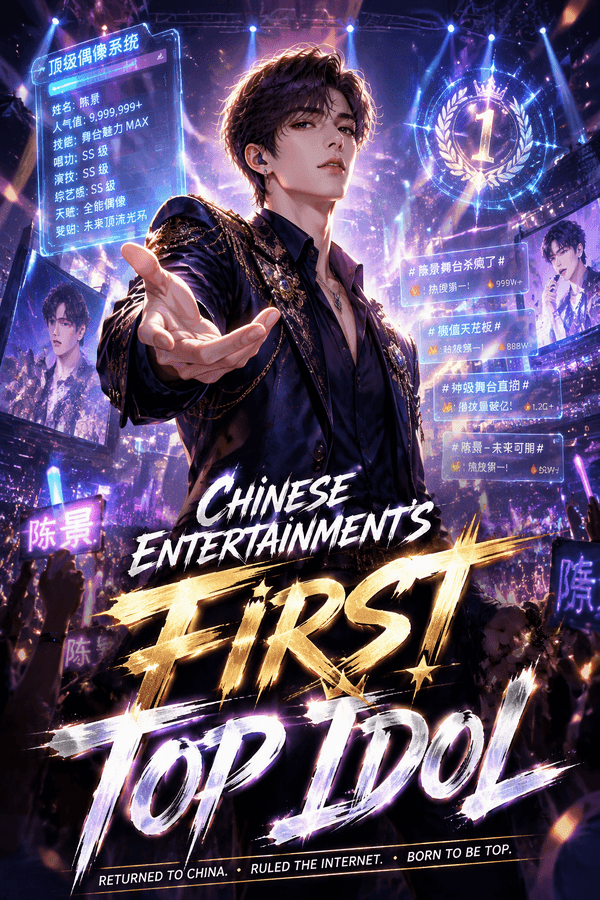
When people mention top idols, Yang Mi might come to mind first, or perhaps the "Four Top Idols and Three Junior Idols", or even the pairing of Bo Jun Yi Xiao!
Among them, the original "Four Top Idols"—consisting of Wu Bufan, Lu Han, Li Yifeng, and Yang Yang—undoubtedly played a pioneering and representative role as traffic idols carved out their territories.
Around 2010 to 2013, the "Korean Wave" struck. During this period, South Korean dramas such as *Boys Over Flowers* and *My Love from the Star* swept across Asia with overwhelming force, and South Korean stars like Lee Min-ho and Kim Soo-hyun generated phenomenal popularity.
Just by attending an event in mainland China, they pocketed a fee of 700,000 dollars—and that was in US dollars!
In comparison, the domestic entertainment industry seemed to lack star idols capable of competing with them, and mainland China indeed needed to cultivate top idols exclusive to its own market to restore its former glory.
Thus, driven by this urgent demand, Li Yifeng emerged to meet the moment.
In 2014, the drama *Swords of Legends* combined costume romance, fresh-faced young actors, and the demands of the times. With the right timing, favorable geographic conditions, and harmonious human relations, Li Yifeng smoothly ascended to the throne of "top idol", becoming the very first figure of the domestic entertainment industry's "top idol" era.
Meanwhile, riding the wave of the "Korean Wave", the South Korean idol group EXO burst onto the scene in 2012.
Unlike when Han Geng and Chen Jing debuted, a time when the South Korean entertainment industry shielded itself from foreign artists, the Chinese members of this era had already become the key for South Korean groups to break into the Chinese market.
The four returning members quickly welcomed the peak of their popularity, fueled by their personal charm and the group's backing.
In the same year that Li Yifeng seized the moment to skyrocket to fame by capitalizing on the explosion of internet traffic—thereby pushing the idol traffic era toward its climax—Wu Bufan and Lu Han successively terminated their contracts and returned to China. Bringing their own fan bases and popularity, the two wasted no time launching their solo careers.
Lu Han's achievements hardly need elaboration: his Weibo repost count broke a Guinness World Record, and he became the first singer whose digital album sales exceeded 100 million yuan, with the "Lu Han Effect" sweeping across all fronts.
...
By the first half of 2015, Yang Yang launched a comprehensive assault across films, variety shows, and television dramas.
From then on, the original "Four Top Idols" were officially assembled.
For a long time, the commercial value of the "Four Top Idols" reached an almost peerless level.
The "Four" could truly be said to have opened the curtain on the era of top idols. In their exclusive golden age, whether in commercial endorsements, film and television dramas, or records, they existed in an almost monopolistic posture, dividing up the most crucial resources of the domestic entertainment industry at the time.
In contrast, Han Geng and Chen Jing had withdrawn from their groups and returned to China at the end of 2009, five or six years ahead of the Four Top Idols.
By that time, the internet had also begun to achieve widespread popularization, and they likewise commanded a substantial fan base.
The popularity of the Four Top Idols had a great deal to do with the rise and peak of mainland China's entertainment sector during those years, an era that gave birth to numerous star popularity rankings.
Countless crazy fans cheered and voted for their idols on these charts. Naturally, the "Four" who consistently occupied the top spots drew immense attention, becoming the representatives of top idols.
However, fan voting and chart-topping existed in mainland China around 2009 as well; it was just that the charts were not as numerous or as complex.
Nowadays, mainland fans are mainly divided into three categories: fans of *Super Girl* and *Super Boy*, fans of South Korean boy and girl groups, and fans of Taiwan singers.
Every group has its passionate followers, with South Korean boy bands being the most sought-after.
This carried a bit of the sentiment that "foreign monks chant better scriptures," and this pattern has continued ever since.
Taking the Four Top Idols as an example, although they were all part of the "Four", Wu Bufan and Lu Han's competitiveness was clearly stronger than that of Li Yifeng and Yang Yang, with both their talent fee quotes and resources noticeably higher.
Consequently, the competitiveness of Han Geng and Chen Jing upon returning to China was higher than that of other domestic idols.
Even though they were "born at the wrong time," Chen Jing was not worried at all, because his and Han Geng's popularity was fully worthy of being called the primary generation of top idols.
Take Han Geng as an example: just how popular was he after returning to China?
He held two consecutive concerts in Beijing, and the tickets sold out in a mere thirty-seven minutes and sixteen seconds, setting the domestic record for the fastest online ticket sales at the time.
On the 2010 annual buzzword list, Han Geng was the only person's name in the top 10, ranking third right behind "gelivable" and "shenma"!
He released his debut solo album *Geng Xin*, achieving physical sales of 530,000 copies—and this was in 2010, when the Chinese-language music market was already declining!
That same year, Han Geng swept virtually all the most popular male singer awards at influential domestic music award ceremonies!
Following that, he appeared on the CCTV Spring Festival Gala for two consecutive years!
He also went on to star in films such as *My Kingdom* and *So Young*.
His presence could be found in various fashion magazines and Milan Fashion Week.
In his very first year back in China, Han Geng made the Forbes China Celebrity List, with an annual income close to ten million!
In 2011, he secured a seven-figure endorsement for *Journey to the West II*!
To say that Han Geng was a top idol of the primary generation upon returning home is no exaggeration at all.
And what about Chen Jing? Although he debuted three years later than Han Geng, Chen Jing's looks and vocal skills surpassed Han Geng's, and his dancing foundation was not the least bit inferior to Han Geng's either.
Otherwise, Chen Jing would never have become the main vocalist and visual center of Super Junior-M!
At that time, Chen Jing's popularity in China and across Asia was basically on par with Han Geng's. If Han Geng hadn't debuted three years earlier and accumulated fans over time, Chen Jing's popularity should have been even more explosive.
This was why Chen Jing was so thrilled; this starting point was worlds apart from his past life!
However, Chen Jing quickly calmed down slightly and began to ponder the path ahead of him after returning to China.
Since the conditions were as such, becoming a top idol was a certainty. Moreover, unlike the other traffic stars of later generations whose top-tier luster faded quickly, Chen Jing was going to be a top-tier traffic star who never lost his luster!
Top idol status obviously had different grades. The "Four" could be considered the highest tier, carving up half of the domestic entertainment industry's resources for several years, with incomes that were terrifyingly high.
Unlike the so-called traffic stars of later generations who dared to call themselves top idols just because they participated in a trainee variety show or because a single song or video went viral.
Compared to the "Four", their incomes, resources, and right to speak suffered an all-around plummet of several tiers.
The quotes of the so-called top idols of later generations simply could not compare with those of the "Four", and on top of that, they had to hand over ninety percent of this income to their agency. Not to mention playing the lead in movies, at best they could only bounce around various variety shows.
Because those traffic stars relied entirely on the traffic artificially generated and purchased by their backing companies, unlike the "Four" who genuinely brought their own traffic, those people naturally had greater bargaining power and earned far more.
Yet even the "Four", after the traffic wave receded and successors swarmed forward, appeared somewhat eclipsed.
The previous generation of top idols was still popular while the new generation had already risen. With every niche occupied by someone, the competition among top idols also became extraordinarily brutal.
Top idols transformed from being prized for their rarity to spreading like carp crossing a river—becoming a flood—and even gradually took on a derogatory connotation.
However, there was one top idol who was viewed with infinite optimism by the industry: Little Four from the Three Junior Idols.
From initially being the least favored member of the group to eventually becoming the one with the most promising future, everyone agreed that Little Four possessed the patience to "withstand loneliness in order to guard the prosperity."
From Little Four's experiences, one could see that in the entertainment industry where traffic is king, variables are constantly present.
Today you are a top idol, but tomorrow you might vanish into silence. You watch them build high mansions, you watch them watch mansions collapse—all the more so in a traffic market that changes in the blink of an eye.
There are many stars, but why is there only one Heavenly King Andy Lau who has stood tall in the entertainment industry for decades without falling?
Everyone is trying to build a presence and manufacture topics, but why can Jay Chou, who hasn't released an album in years, still outpace all competition?
Whether they are seasoned veterans who have lingered in the entertainment industry for years or fresh-faced rookies, everyone wants to become a permanent star shining brightly across the firmament rather than a fleeting shooting star.
Yet when all is said and done, the magic weapon that allows stars and idols alike to stand tall in the entertainment industry for the long haul is none other than possessing top-notch strength and solid works to back oneself up!
Therefore, being a top idol is not terrifying; whoever lacks works is the one who feels awkward!
And as it happened, when it came to works, Chen Jing had absolute confidence.
Furthermore, the position of top idol is a limited niche. If you want to become a top idol that never loses its luster, you have to take down one rival top idol after another who wants to replace you.
Thinking of this, Chen Jing couldn't help but look at Han Geng standing right beside him!