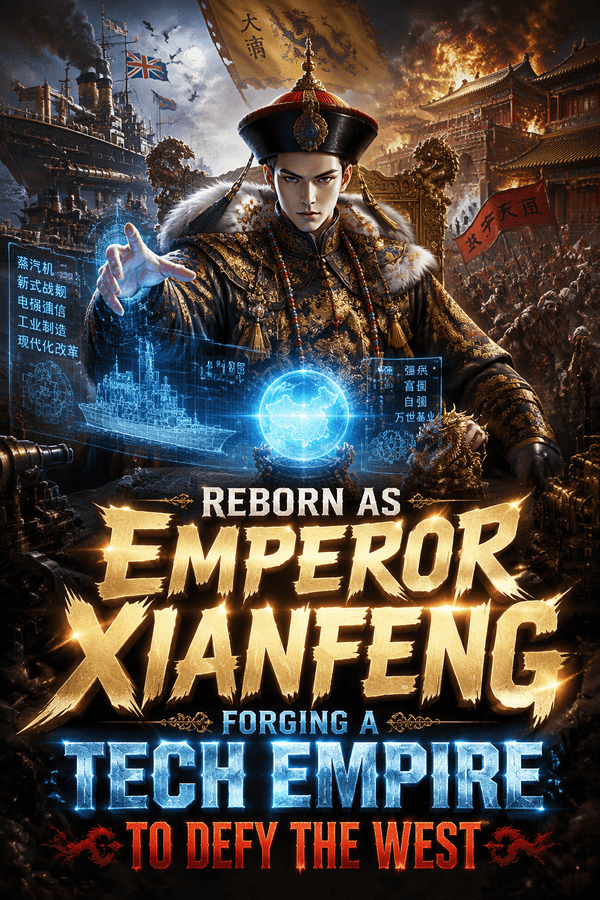
As soon as Su Ran returned to the Capital, he became like a tightly coiled spring, devoting his body and soul to the tense preparations for countering the threats posed by the Great Powers. Without a moment’s rest, he urged the coastal provinces to spare no effort in reinforcing their maritime defenses, ensuring every brick and tile was rock-solid. Simultaneously, he dispatched elite troops to hold every inch of the coastline like iron nails, securing the borders as firmly as a fortress. On the other front, he provided comprehensive support to research institutions, pouring in funds and mobilizing resources while demanding they work against the clock to develop new warships capable of contending with the Great Powers—like searching for a dawn that could light the way through the dark.
However, seeing that the Great Qing had not succumbed to fear and retreated as they had hoped following the joint military exercises, and instead was actively and methodically preparing for war, Britain, France, and the other nations grew livid with shame and rage. They shifted their strategy, launching a fierce diplomatic offensive against the Great Qing. In an arrogant and haughty manner, they issued a diplomatic note to the Great Qing, turning truth on its head by accusing the country’s normal military preparations of being a severe threat to regional peace. They bullyishly demanded that the Great Qing immediately cease all related actions, or else they would not hesitate to take further, more forceful measures.
Clutching the diplomatic note from Britain, France, and the others, Su Ran narrowed his eyes. A flicker of disdain and resolve flashed in his gaze, and a cold smile touched the corners of his mouth. He thought to himself, "This is nothing but a bluff. To think you can force the Great Qing to submit with this—it is absolutely impossible!" He knew well that this was a standard tactic of the Great Powers, attempting to use diplomacy to achieve what military threats could not. But he had already made up his mind: the Great Qing had endured countless hardships to reach this point and must not shrink back due to the intimidation of the Great Powers. Concession would only make the intruders more unscrupulous and lead to even more brutal aggression.
Su Ran immediately summoned the experienced Minister of Foreign Affairs to discuss a strategy. In the imperial court, the atmosphere was heavy. With a firm expression and eyes like burning torches, Su Ran said, "Gentlemen, the Great Powers are attempting to isolate us diplomatically and force us to abandon our resistance and submit. But we must not let their scheme succeed; we must rise up and fight back!"
A white-haired, seasoned Minister of Foreign Affairs stepped forward calmly, bowed, and said, "Your Majesty, although Britain, France, and the others appear united and are pressuring us with great momentum, they are not actually of one mind and possess many conflicting interests. We can take advantage of this to cleverly divide and dismantle their alliance. At the same time, we can strengthen ties with other nations that remain neutral in international affairs and actively strive for the support of international public opinion, allowing more countries to understand the position and demands of the Great Qing."
Su Ran’s eyes brightened upon hearing this; he felt it was a brilliant plan. He immediately deployed multiple diplomatic envoys, splitting them into several groups to head toward different nations. One group traveled in secret to Germany, which had long-standing conflicts with Britain and France over colonial issues. At the negotiating table in Germany, the atmosphere was tense and oppressive. The German representatives held many reservations about cooperating with the Great Qing, fearing that such a move would infuriate Britain and France and affect their own interests in Europe. The envoys of the Great Qing, however, remained poised and dignified, detailing the massive economic benefits and the complementary advantages in military technology that cooperation would bring. After rounds of arduous negotiation and maneuvering, the two sides finally reached a preliminary agreement on economic and military technical cooperation. Once this news leaked, it was bound to trigger the wariness of Britain and France.
Another group of envoys traveled without delay to small nations that maintained neutrality in international affairs. They explained to the dignitaries of these countries the Great Qing’s philosophy of peaceful development, emphasizing that the New Policies were aimed at achieving national prosperity and the happiness of the people, rather than seeking external expansion. They expressed a hope to live in friendship with all nations and jointly maintain regional peace and stability. These small, neutral nations were moved by the sincerity of the Great Qing and pledged to speak up for them in the court of international opinion, condemning the unprovoked threats and provocations of the Great Powers.
Domestically, Su Ran also launched a publicity campaign to expose the predatory nature of the Great Powers. Through posters, public lectures by officials, and various other means, he ensured the common people deeply understood the wolfish ambitions of the invaders. For a time, a wave of patriotism surged through every street and alley in the country. People spontaneously took to the streets, holding high banners that read "Defend the Great Qing, Resist the Great Powers." They shouted with passion, their voices merging into a powerful roar that seemed to pierce the very clouds. Merchants donated vast sums of money to the imperial court to support the military preparations, and healthy young men vied to enlist in the army, their eyes filled with a firm determination to defend their homes. The entire Great Qing became like a roaring furnace of patriotism, forging a powerful force.
Meanwhile, heartening news arrived from the research institutions. After the relentless, sleepless efforts of the researchers, the design for the new warships was finally completed. These new warships utilized the latest steam-propulsion technology, as if endowed with a powerful heart, giving them a qualitative leap in speed and maneuverability. They were also equipped with advanced artillery systems with longer range and greater power, promising to surpass some of the existing warships of the Great Powers in performance.
Upon learning this, Su Ran was overjoyed, his eyes sparkling with excitement and anticipation. He immediately ordered the Ministry of Works to spare no expense and build the new warships according to the design at the fastest possible speed, as if forging an indestructible maritime fortress for the Great Qing. At the same time, he did not slacken in the training and equipment upgrades for the army, ensuring that the Great Qing’s forces would possess formidable combat power in every aspect.
However, the Great Powers seemed to have sensed the series of actions taken by the Great Qing, and they became even more vigilant and frantic. Their warships prowled the coast like ghosts, shifting positions frequently. The atmosphere grew increasingly tense and stifling, like the dead silence before a storm. The people in the coastal regions lived in constant anxiety; the howling of every sea breeze felt like the prelude to war. Rumors of the Great Powers plotting a larger-scale military operation—an attempt to deliver a "fatal blow" to the Great Qing and completely destroy the achievements of the New Policies—hung over the country like a dark cloud, leaving people unable to breathe. Facing such a severe situation, Su Ran knew that a true, major battle might now be unavoidable. But he had made full preparations. No matter what moves the Great Powers made, he would lead the Great Qing through the turbulent international waters, overcoming thorns and thistles to carve out a path to survival, and continue to unswervingly promote the New Policies to achieve the prosperity of the Great Qing. But in the coming war, would the Great Qing truly be able to withstand the assault of the Great Powers?