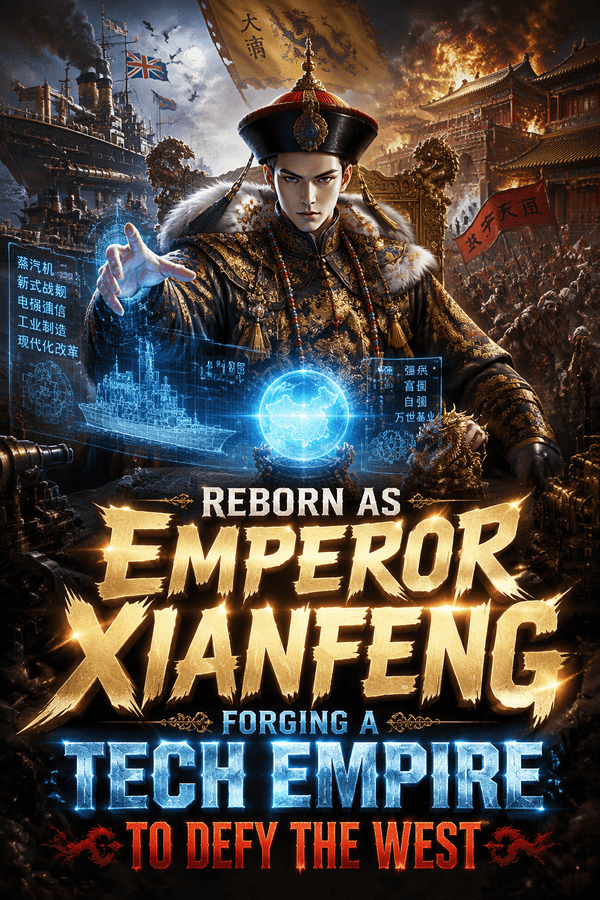
Su Ran unfolded the secret report from the Northern Frontier, his eyes sweeping rapidly over the text. It stated clearly: Tsarist Russia was frequently increasing its troop levels at the border, seemingly with the intent to invade. Seeing the Great Qing gradually rising under the momentum of the New Policies, Tsarist Russia had grown apprehensive. They hoped to exploit the fact that the New Policies were not yet fully consolidated within the Great Qing to seize territory and expand their sphere of influence in the Northern Frontier.
Su Ran mused to himself that Tsarist Russia had always been ambitious, like a greedy, starving wolf. If not handled properly, the people of the Northern Frontier would be plunged into misery, and the hard-won achievements of the New Policies could be destroyed in an instant. He dared not delay, immediately summoning the grand councilors and frontier generals to the court to discuss countermeasures.
"Gentlemen, Tsarist Russia is stirring at the Northern Frontier, and the situation is critical. We must devise a response as soon as possible." Su Ran's expression was grave, his eyes revealing both anxiety and resolve, his voice echoing through the empty hall.
An old frontier general stepped forward. Though no longer standing tall, his eyes still held the steadfastness of a veteran of many battles. He bowed and said, "Emperor, the Tsarist Russian army relies primarily on cavalry; they are highly mobile and skilled at fighting in cold climates. While our military has improved through new armaments, the Northern Frontier is vast, our defensive lines are long, and the difficulty of defense is immense. In this old subject's opinion, we should first reinforce our border fortresses and stockpile grain and ammunition. By waiting while the enemy exhausts themselves, we can rely on sturdy fortifications to repel the Tsarist Russian offensive." As he spoke, the old general’s brow was furrowed, his face full of worry, and his hands trembled slightly as he bowed, revealing his deep concern for the situation.
Su Ran nodded slightly, acknowledging the old general's point, yet he knew that defense alone could not solve the root of the problem. At this moment, a young military adviser stepped forward with a firm gait: "Emperor, since Tsarist Russia has increased their troops, their rear must be vulnerable. We could dispatch an elite force to detour through Siberia and launch a surprise attack on their major military hubs. This would force them to pull back, thereby easing the pressure on our Northern Frontier defenses. Though the plan is risky, it might achieve a surprise victory." The young adviser's eyes sparkled with intelligence and boldness, his tone full of confidence.
The others agreed that the plan was daring but feasible. Su Ran sat upon his dragon throne, his fingers tapping unconsciously against the armrest, his mind a tangle of thoughts. The threat from Tsarist Russia was imminent, and the people of the Northern Frontier were in peril, yet internal corruption was eroding the very foundation of the New Policies like a malignant tumor. How could he balance these factors to ensure the Great Qing weathered this crisis? After weighing the pros and cons, he decided to adopt a two-pronged approach. On one hand, he ordered the frontier garrisons to expedite the construction of defensive fortifications, recruit local able-bodied men to expand their ranks, and intensify training. On the other, he selected a group of elite cavalry—the cream of the military, agile and resolute. Equipped with the latest firearms, they would be led by a seasoned general assisted by the young adviser, secretly detouring through Siberia to execute the surprise raid.
Meanwhile, Su Ran wrote to countries like Britain and France, exposing the aggressive intentions of Tsarist Russia and hoping they would mediate and apply diplomatic pressure. After all, those nations did not wish to see Tsarist Russia's influence in the Far East expand to the point of threatening their own interests.
Under Su Ran's meticulous arrangements, the Great Qing moved into action. On the Northern Frontier, the bitter wind howled like a blade, and the land was blanketed in snow, a vast expanse of silver. In the freezing cold, the soldiers’ breath turned to frost instantly, clinging to their eyebrows and whiskers. Organized by the Qing military, the people braved the cold to assist in building forts and transporting supplies. Their hands were red with frostbite, yet they gritted their teeth and persevered, their eyes filled with a desire to protect their homes.
The elite force that had departed in secret struggled forward across the vast snowfields. The extreme cold was like a heartless demon, constantly testing the soldiers' will. Their horses struggled through the deep snow, every step agonizingly heavy. The soldiers' hands and feet had long since gone numb, but they harbored a belief in defending their country and would not retreat. During their march, they discovered strange signs: messy footprints in the snow that did not appear to have been left by ordinary hunters. Unsure if they were friend or foe, the soldiers felt a hint of unease, though this only made them more vigilant.
However, just as the Great Qing was focusing all its efforts on Tsarist Russia, new problems emerged at home. In the process of implementing the New Policies, some local officials were feigning compliance while acting in their own interests, distorting policies intended for the public good beyond recognition. The people, who should have been benefiting from the New Policies, were instead bearing heavier burdens, and complaints began to mount. Upon learning this, Su Ran was furious. He knew that if the bureaucracy were not cleaned up, the New Policies would lose the people's support, and the foundation of the Great Qing would be shaken. But with war at the Northern Frontier imminent, how could he spare the energy to handle domestic corruption while ensuring the strategy against Tsarist Russia proceeded smoothly? And could the raiding force deep in Siberia succeed in their mission and turn the tide at the Northern Frontier? The Great Qing stood at a critical juncture, besieged from within and without, and Su Ran faced a challenge of unprecedented scale.